


Turin, past and future: 5 museums too good to be missed!
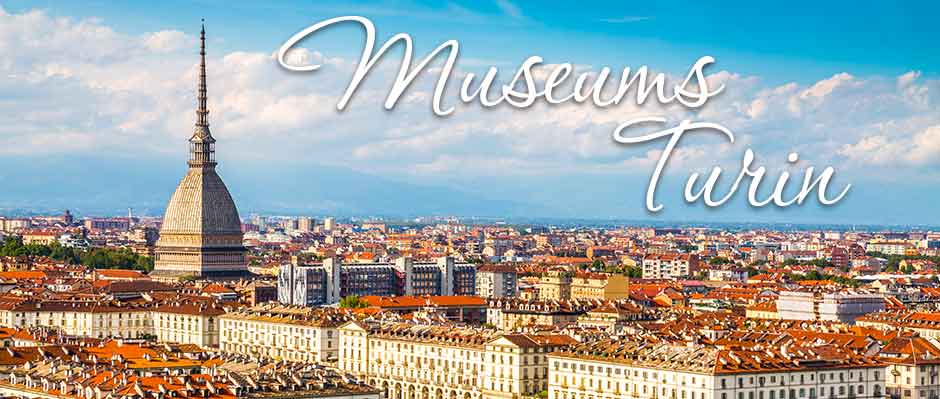
Turin has always been considered as one of the most attentive Italian cities to the world of art, cinema and culture. Past and future, here are the 5 museums too good to be missed!
Turin is a city of art, culture and history, the ancient capital of the Kingdom of Savoy and a romantic but dynamic corner of Italy. Turin expresses itself in its different and coloured shades, between precious pieces of ancient, fascinating history and examples of a modern architecture that enchant your eyes and soul.
According to the painter Giorgio De Chirico
Turin is the most deep, enigmatic and unsettling city, not of Italy but of the world.
Here are the 5 most beautiful museums of Turin, worthy of this definition.
Together with the good whether, arrived also the desire to travel: a trip out is the best way to visit places that are not far away, but are not very common. Our Vip Limousine team can help you to spend relaxing cultural days, without worrying about the long-distance transfers.
Contact us to choose which Vip Limousine Milan Luxury car rental with driver service is the most suitable to your needs: for example the transfer service from Milan’s airports or the transfer from the train stations, so you can be worry free since your arrival.
1 - Egyptian Museum
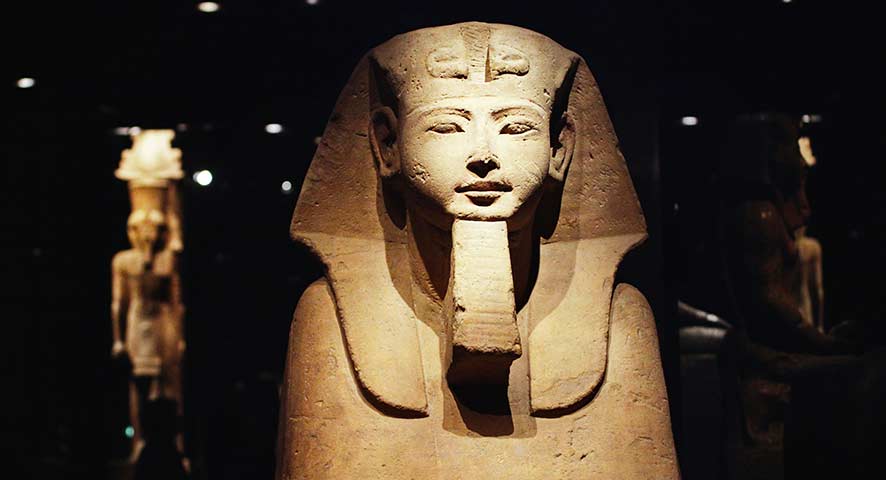
Since its foundation (1824), the Egyptian Museum has been settled in the “Collegio dei Nobili” palace, built on the basis of Michelangelo Garove’s project started in 1679, when the first antiques of the Drovetti collection were exposed and bought by King Carlo Felice.
Turin’s Egyptian Museum is the second largest in the world after the main one situated in Cairo: after structure’s restoration its exhibition area increased from 6.400 to 10.000 square metres, starting from the underground part and arriving at the fourth and last floor of the building.
The edifice of Turin’s Egyptian Museum, thanks to Giuseppe Maria Talucchi and Alessandro Mazzucchetti’s intervention, was enlarged and adapted to its new use during the second half of the nineteenth century. In 1832 Turin’s Egyptian Museum opened its doors to the public.
During the 19th century the Egyptian Museum acquired also some minor collections from private persons or through exchanges with other museums. Moreover, during the important excavations in the 1930s, the Ellesyia’s rock-cut temple was recreated and offered to the Museum by the Egyptian Government in recognition for the Italian help in the work of saving the Nubian temples endangered by the Assuan dam’s waters.
In the 1980s there was necessity to replan the tour at the Turin’s Egyptian Museum, because new spaces were created and assigned to exhibitions: on the ground floor was made a wide hall intended to host the antiques from the Ancient Kingdom and the Pre-dynastic Age.
During Turin’s Winter Olympic Games in 2006, the statues’ exhibition hall was changed by the pluriprized scenographer Dante Ferretti: his project was developed, set up and called “Stone reflections” because characterized by the installation of particular spotlights with soft light.
In the ground floor halls of the Egyptian Museum of Turin are exhibited the most suggestive sculptures of the collections: sphinxes, sarcophaguses, offering tables, architectural elements, but mostly monumental statues showing some of the most important and famous Pharaohs and divinities: there are the kings Thutmose III, Amenophis II, Tutankhamun, Horemheb, Ramesses II, Seti II: colossal figures, the most of which are more than 5 metres high.
2 - The Mole Antonelliana and The National Museum of Cinema
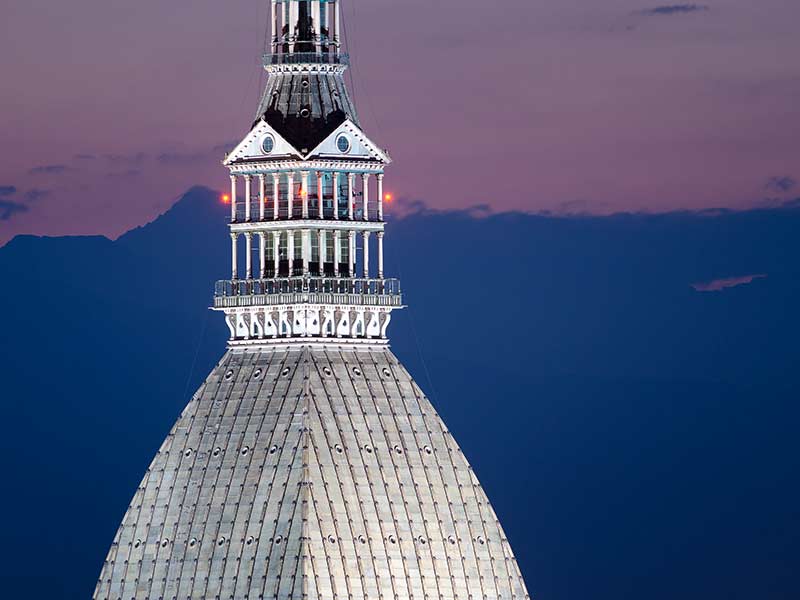
The Mole Antonelliana has always been Turin’s symbol and it hosts the National Museum of Cinema: a perfect fusion of art, culture, recreation and architecture. In its 167 metres in height it contains the cinematographic art that characterized not only Italy.
Turin’s Egyptian Museum hasn’t always been here, it arrived after various vicissitudes that saw Maria Adriana Prolo’s goods (historian and collector after whom the foundation of the museum is named today) move first of all in The Chiablese Palace, where it was inaugurated, than at the Massimo Cinema and at the end, from July 2000, at the Mole Antonelliana. The building itself is a very interesting architectural attraction to visit, because for many years it was the highest masonry building in Europe. However, actually it isn’t exactly right: due to structural problems that put at risk its stability, in the 20th century the Mole Antonelliana was strengthened using impressive concrete pillars and steel beams.
At the end of the visit you can also go up on the Mole Antonelliana and enjoy an incredible panoramic view on Turin.
Turin’s Mole Antonelliana is always in our pocket: it is represented on the 2 cents coin, this to indicate how old is the construction.
It was projected by Alessandro Antonelli and commissioned by the Jewish community of Turin that wanted a majestic synagogue. It risked to remain incomplete because of the growing costs during the construction and it was finished just in 1889 and bought by the City of Turin that changed its destination and transformed it in a Monument to the King as a Risorgimento Museum. After the consolidation work, the building was managed by the Civic Museums of Turin, that officially created the National Museum of Cinema.
Turin’s Museum of Cinema is divided in three sections:
- The first section hosts documents and objects illustrating the evolution of cinema and of the museum itself;
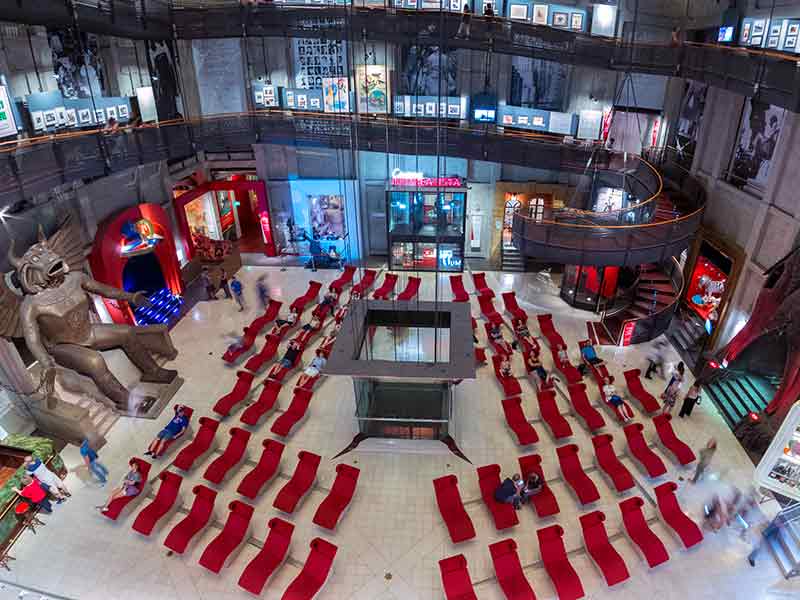
- The second section is called "The Temple Hall" and is situated in the central part of the Mole Antonelliana. Here you can sit on comfortable armchairs with incorporated speakers and watch interesting historical footages. From here you can admire the height and the elegance of the Mole Antonelliana of Turin. Around the flight of stairs that bring to the upper floors, you can observe pictures of famous cinema faces;
- The third section of the museum is organised around the Temple Hall. There are many pavilions for every cinematographic genre as science fiction, horror, adventure and animation. You can visit each pavilion and take pictures near to mannequins and scene objects of the different movies. Moreover, you can take really pleasant didactic paths.
During the year, the National Museum of Cinema of Turin manage and organise also three cinematographic Festivals of international importance: the Torino Film Festival, the Italian Environmental Film Festival and the GLBT Film Festival “From Sodoma to Hollywood”.
3 - Pinacoteca Giovanni and Marella Agnelli
In a structure suspended on the roof the Lingotto of Turin, Headquarters of the first big Fiat factory, is permanently open to public the works of art collection belonged to the lowyer Giovanni Agnelli and to his wife Marella.
The Pinacoteca Giovanni e Marella Agnelli represents the final moment of the more than 20 years process that transformed the Lingotto, the building that maintains the grandness and the strength of the automotive factory projected by Giacomo Mattè Trucco.
The “scrigno” (trunk), as it’s called by its creator Renzo Piano, hosts 25 extraordinary masterpieces (23 paintings and 2 sculptures) going from the 18th to the 20th century.
Among the exhibited art works you can see a unique in Italy collection of 7 paintings of Matisse, a painting of Balla from 1913 on the topic of automobile’s speed, masterpieces of Severini, Modigliani and Tiepolo.
The collection contains also precious testaments of the Venetian art: 6 extraordinary views on Venice painted by Antonio Canal, said Canaletto, and 2 views on Dresda by Bernardo Bellotto, so precise that was used as models to reconstruct the city after the World War II.
There are works of Picasso, one from the blue period and the other from the cubist period, and impressionist testaments from Renoir and Manet. Finally, there are 2 plaster statues by Antonio Canova: the Dancer with Finger on Chin and the Dancer with Hands on Hips.
Under the “Scrigno”, the Pinacoteca Giovanni and Marella Agnelli is going down for other 5 floors, where you can see temporary exhibitions, a consulting hall dedicated to the topic of collecting, a didactic centre, the offices and a bookshop.
"It was a lot of time that my grandfather was thinking to do something about his city, something that could show how strong is his connection with this place.
This time he wanted to do it personally, in his own way, with something that could last in time and could strengthen Turin’s international visibility and prestige.
The exhibition doesn’t talks only about their passion for art, it says also a lot about their idea on beautiful and on how they look at it and get pleasure of it.
This is also a way to communicate, that I believe, gets more interesting, alive and fascinating the visit".
From John Elkann’s speech during the press conference for the presentation of the Pinacoteca Giovanni and Marella Agnelli, Turin, September the 19th, 2002.
The Lowyer for all the Italian people is the nickname of the legendary owner Giovanni Agnelli, which unmistakable style started the fashion to wear the watch over the cuff. A businessman and an illuminated politician, he had the weakness for Canaletto’s landscapes: 6 his paintings are exhibited here.
Before you go, you have to get to the proving ground, included in your ticket: it is quite unnecessary to suggest it, try to think to the panorama on the Alps that you could see from there!
4 - Museo Nazionale dell’Automobile
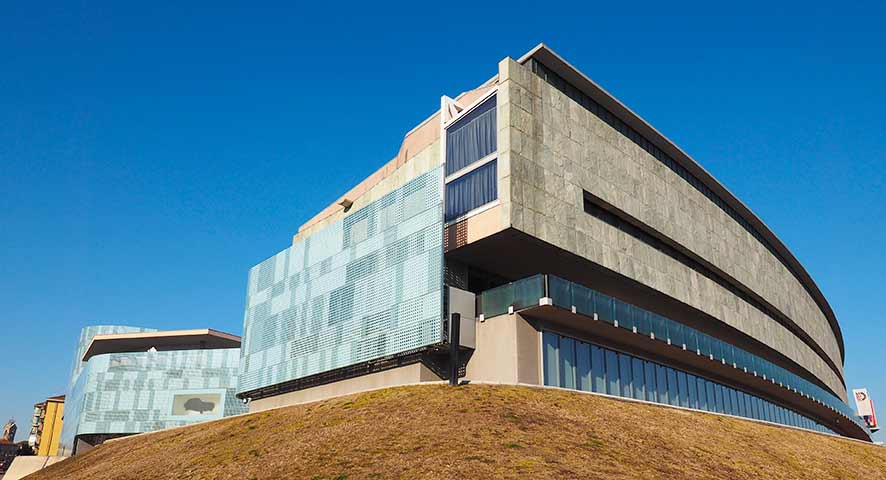 In Turin you will find modern, fast and always at the forefront spirit, an example is the Museo dell’Automobile, also said Mauto. Reopened after a reconstruction in 2012 it is the jewel of the crown in a city that is one of the headquarters for the automobile industry in Italy.
The Museo dell’Automobile was born in 1932 starting from the idea of two pioneers of the National motor sport: Cesare Goria Gatti and Roberto Biscaretti di Ruffia (the first President of the Automobile Club Turin and one of the Fiat founders).
It is one of the most ancient Automobile Museums in the world. The board of directors entitled it to its creator Carlo Biscaretti di Ruffia: the Museo dell’Automobile was than solemnly inaugurated on November the 3rd, 1960.
The purpose of the Museo dell’Automobile is to illustrate automobiles’ history, not only as vehicles, but contextualized in the period when they was produced, and in relation to the events that marked the history of the 20th century.
The Museo dell’Automobile hosts one of the rarest and most interesting collections in its genre, nearly 200 original automobiles from the second half of the 19th century until today, more than 80 different brands coming from Italy, France, Great Britain, Germany, Holland, Spain, Poland and USA.
The Museo dell’Automobile’s ticket is a token for a roller-coaster emotional ride for three floors with more than 9.000 square metres of exhibitions and examples coming from 8 countries.
The first floor is a critical reflection on issues currently being dealt with as traffic, pollution and a reproduction of all the Italian vehicles that participated to the great international circuits.
The second floor is dedicated to history with rare and unique pieces: a Peugeot of the 1894, a Rolls-Royce of the 1914, an obviously red Ferrari of the 1980, and some outsiders that will make you smile as the Volkswagen little vans and FIAT 500 painted peace & love. The ground floor is reserved to the design, with visionary prototypes and the interviews with the biggest contemporary designers.
Even if you don’t love cars, don’t worry, you’ll equally love this Turinese museum!
5 - Juventus Museum
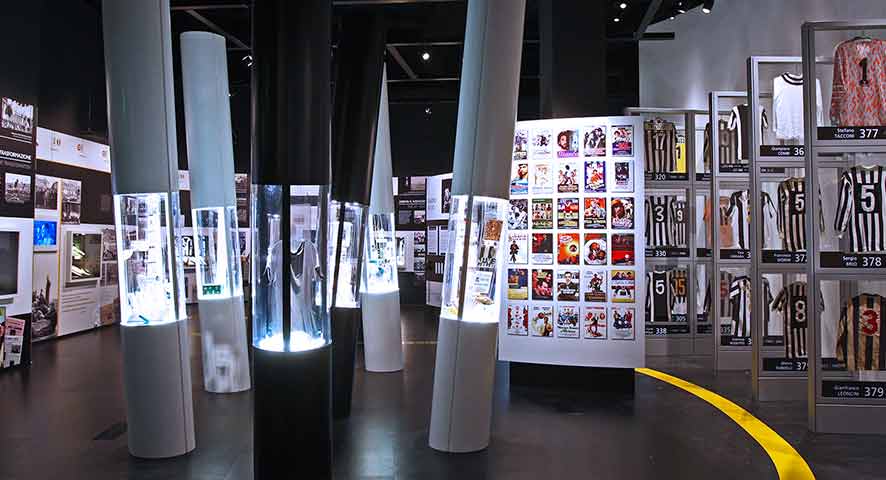
More than 100 years of history and “blackandwhite” triumphs in an exhibition of trophies, jerseys, yearbooks and the notebook attesting the foundation: all this and more is illustrated in the Juventus Museum or J-Museum, a history starting in 1897 and going on through victories and events that marked the cultural epochs of an entire nation.
The Juventus Museum was inaugurated in May 2012: it is a technological evolution of the traditional museum concept and proposes itself as a unique and unforgettable experience, where is illustrated how Juventus is not only a football phenomenon, but a strong and significant presence in our Country’s daily life and a symbol in the entire world.
The Juventus Museum, realized by the studio Camerana&Partners, collaborating with the Studio Dedalo, a group of specialists in museum design, is situated in the East wing of the Juventus Stadium. It represents the completion of a project that received great approvals and became also a centre of attention, not only in occasion of the matches, but also during the rest of the week.
The Juventus Museum occupies 1.500 square metres and is entirely bilingual, with the possibility to use autonomously all the multimedia contents. The entire exhibition area is conceived as a historical, cultural and multimedia path, and its relics, testimonies and trophies can be admired and lived, thanks to audio and video contributions and a very suggestive context. The user does not just visit the Juventus Museum, but can discover, interact, create his own path inside Juventus’ history and thus be also tempted to return.
The Juventus Museum is divided in 2 different areas, physically and conceptually, that make the user dive in Club’s history and in team’s value in daily life.
Touching with your eyes the original jerseys of legends as Del Piero, Nedved, Trezeguet, Conte, Platini, Zidane, Zoff, Scirea is an emotion that will make beat your heart.. also if it isn’t “blackandwhite”.
The Juventus Museum is confirmed between the most visited museums of Italy and in 2017, registered more than one million visitors!
A tour around the Turinese museums with Vip Limousine
Vip Limousine has been taking care of short, medium and long-distance transfers for years, offering a full service of luxury car rental and drivers available 24 hours a day.
Vip Limousine, luxury car rental with driver in Milan is more than a simple luxury transfer operator: it supplies all-round exclusive services and dedicates great care to every little detail.
For any further information, requests and quotes do not hesitate to contact our Vip Limousine Call Center operating on a 24-hour basis, 365 days a year!

Tags: Excursions with driver, Car rental service Milan, Cultural events